

And Why Storytelling has become a strategic business advantage
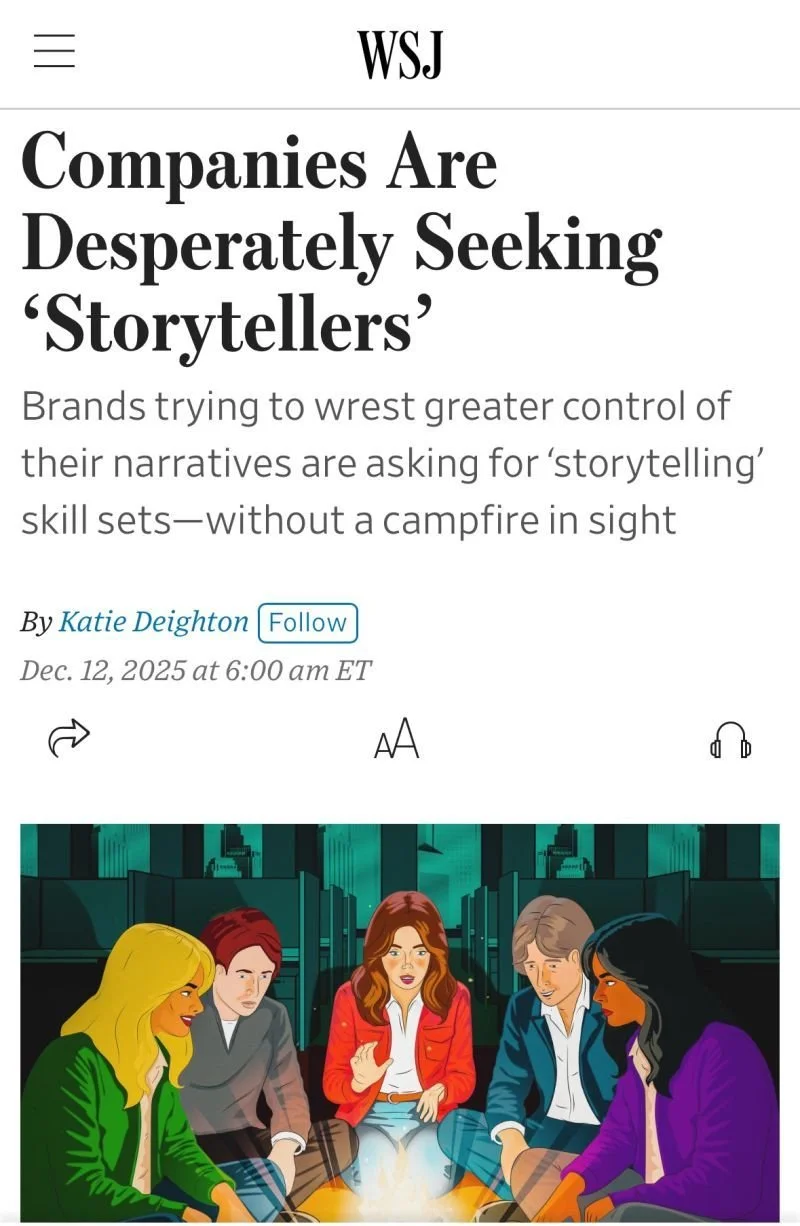
In December, The Wall Street Journal published an articel that captured something that many of us in marketing, media, and events have felt for years: companies are not longer just looking for marketers, they’re looking for storytellers.
This isn’t a trend rooted in creativity alone. It’s a response to a very real business problem.
Audiences are overwhelmed. Algorithms are crowded. Traditional media reach is shrinking. And yet, brands still need trust, loyalty, and connection to survive.
The answer isn’t more content.
It’s better stories.
Why storytelling works (especially in western and event-based industries)
Storytelling works because it does what advertising alone cannot: it creates meaning.
Across industries, data consistently shows that story-driven content improves recall, emotional connection, and long-term loyalty. In event-based, agricultural, and Western lifestyle spaces, this effect is even stronger.
These industries are not transactional by nature. They are cultural.
People don’t just attend a rodeo, buy beef, visit a winery, or travel to rural Oregon because of features or pricing. They do it because of identity, heritage, values, and community. Storytelling is how those intangible elements become visible and shareable.
In practical terms, this means:
Stories outperform product-first messaging for engagement
Narrative-based campaigns build trust faster than promotional ones
Brands that tell human stories see longer audience retention and repeat engagement
Events that invest in storytelling create communities, not just attendance spikes
The shift from owned media to owned narrative
As traditional earned media continues to decline, brands are being forced to become their own publishers.
Websites, blogs, podcasts, social channels, livestreams, and email have replaced newspapers and magazines as the primary way people consume industry stories. This shift has created a demand not just for content, but for editorial judgement - the ability to decide what matters and why.
This is where storytelling is not about volume. It is about clarity, context, and connection.
Our work sits at the intersection of journalism, marketing, and culture. We treat every brand, association, and event as a living ecosystem with a story already happening, and our role is to surface it, shape it, and share it with the right audience.
That approach has taken many forms over the years.
editorial and industry writing
Our storytelling foundation is rooted in editorial work across agriculture, ranching, rodeo, agtech, and Western lifestyle media.
This includes writing for:
National and state cattle organizations, including NCBA, Oregon Cattleman, Brangus Association, and The CATTLE Mag magazine
Agricultural and agtech publications and columns such as Western Ag Reporter, The AG Mag magazine, AgGrad blog, and The CATTLE Mag magazine
Rodeo, tourism, and Western culture outlets, including Westeer Ag Reporter, Travel Oregon, Travel Central Oregon, and regional publications
This background matters because it brings journalistic discipline into brand storytelling. Not every story is marketing copy. Some are meant to inform, educate, preserve history, or elevate voices that deserve attention.
event and experiential storytelling
Storytelling does not stop at the written word.
We have built narrative arcs for live events, festivals, and competitions where storytelling happens in real time. This includes:
Script development and narrative structure for livestream and webcam series such as the JamCam
Artist profiles, behind-the-scenes features, and press releases that extend the life of live music and cultural events
Story-driven coverage of BBQ competitions, food culture, and community events
Long-form and episodic storytelling that turns moments into movements
Live television host for the COWGIRL 30 Under 30 Girl Talk segment in Texas
Events are successful when people feel part of something bigger. Storytelling is what turns attendance into belonging.
Podcasting and long-form narrative
Through That Western Life, storytelling becomes conversational and human.
Podcasting allows space for nuance, history, humor, and depth - qualities often lost in short-form marketing. This format has become a powerful tool for brands and industries that want to lead conversations, not just promote products.
Why third-party storytellers matter
One of the reasons companies are seeking storytellers outside their internal teams is perspective.
Third-party contractors and freelance storytellers bring:
Distance from internal bias and institutional blind spots
Cross-industry insights from working with multiple sectors
Editorial instincts honest outside corporate silos
The ability to scale storytelling across platforms without long-term overhead
In many cases, an external storyteller can see that value in a brand’s story more clearly than those closest to it.
Storytelling as infrastructure, not ornament
The most successful organizations treat storytelling the way they treat operations, finance, or strategy - as infrastructure.
It informs how brands show up online.
How events are experienced.
How communities are built.
And how trust is earned over time.
At Western Insights Media, we believe storytelling is not about embellishment. It is about alignment. When a brand’s story is clear, consistent, and human, everything else works better.
The Question every brand should ask
The Wall Street Journal may have captured the headline, but the underlying question is simple:
If someone encountered your brand for the first time tomorrow, would they understand why you exist and why they should care?
If the answer is unclear, the solution is not more marketing.
It’s better storytelling.